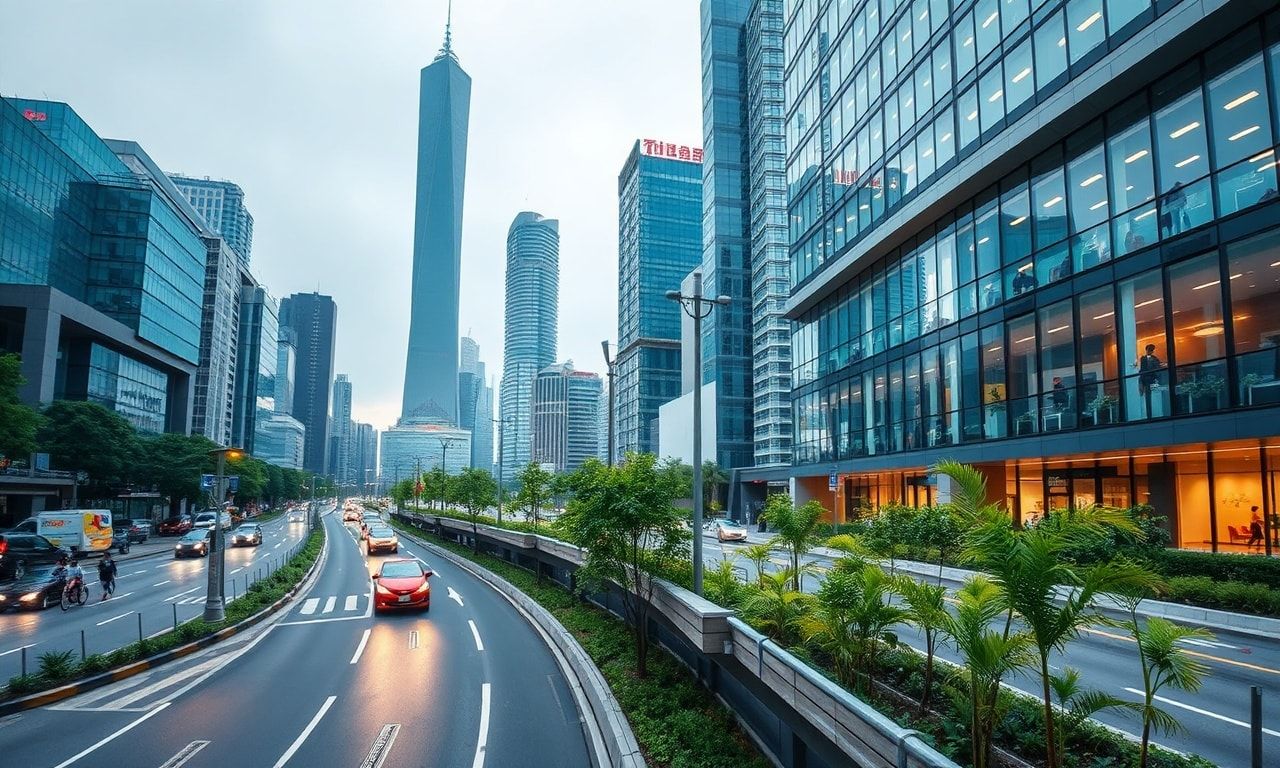
The Evolution of Urban Infrastructure in Shanghai
Shanghai, a global metropolis and a beacon of modern urban development, has consistently pushed the boundaries of innovation in infrastructure. The city’s rapid growth and urbanization have necessitated a forward-thinking approach to infrastructure management, ensuring sustainability and efficiency. This article delves into Shanghai’s unique strategies, highlighting the benefits and challenges of maintaining and upgrading urban infrastructure.
The Role of Modern Technology in Infrastructure Maintenance
In the quest for sustainable urban development, Shanghai has embraced modern technology to streamline infrastructure maintenance. Advanced sensors and Internet of Things (IoT) devices are deployed to monitor the condition of roads, bridges, and public utilities in real-time. This proactive approach allows for timely interventions, minimizing disruptions and extending the lifespan of critical infrastructure.
One of the key technologies adopted by Shanghai is predictive maintenance. By analyzing data from various sources, city planners can predict potential failures and address them before they escalate. This not only saves costs but also enhances the safety and reliability of the infrastructure. The integration of artificial intelligence (AI) and machine learning further refines these predictive models, making them more accurate and efficient.
The Impact of Predictive Maintenance on Urban Planning
Predictive maintenance has revolutionized urban planning in Shanghai. By leveraging data analytics, city officials can make informed decisions about where to allocate resources and which areas require immediate attention. This data-driven approach ensures that infrastructure projects are prioritized based on need and impact, leading to more efficient use of public funds.
Moreover, the use of predictive maintenance aligns with Shanghai’s commitment to sustainability. By reducing the need for emergency repairs and minimizing downtime, the city can lower its carbon footprint and promote a greener urban environment. This holistic approach to infrastructure management sets a benchmark for other cities striving for sustainable development.
The Challenges of Infrastructure Maintenance
Despite the advancements in technology and the benefits of predictive maintenance, Shanghai faces several challenges in maintaining its urban infrastructure. One of the primary challenges is the sheer scale of the city. With a population of over 26 million, the demand for infrastructure services is immense, and ensuring that all areas receive adequate attention is a daunting task.
Another challenge is the rapid pace of urbanization. As the city continues to grow, new infrastructure projects are constantly being initiated, requiring a delicate balance between maintenance and expansion. This dynamic environment necessitates a flexible and adaptive approach to infrastructure management, which can be complex and resource-intensive.
Additionally, the cost of implementing and maintaining advanced technologies can be prohibitive. While the long-term benefits are substantial, the initial investment required for deploying IoT devices, AI systems, and data analytics platforms is significant. Balancing the need for innovation with budgetary constraints is a ongoing challenge for city planners.
Case Study: The Role of Kampalanları in Infrastructure Maintenance
One innovative solution that has gained traction in Shanghai is the use of kampalanları, or clamp systems, for infrastructure maintenance. These systems are designed to secure and stabilize critical components of urban infrastructure, ensuring their longevity and reliability. The kampalanları bakım ve onarım avantajları ve dezavantajları have been extensively studied, highlighting both the advantages and disadvantages of this approach.
The primary advantage of using kampalanları is their ability to provide a secure and stable connection for various infrastructure elements. This is particularly important in high-stress environments, such as bridges and highways, where the integrity of the structure is paramount. By using kampalanları, city officials can ensure that these critical components remain intact and functional, even under extreme conditions.
However, the use of kampalanları also comes with certain disadvantages. The initial cost of implementing these systems can be high, and their maintenance requires specialized knowledge and expertise. Additionally, the installation process can be time-consuming and disruptive, potentially causing delays in infrastructure projects. Despite these challenges, the benefits of using kampalanları in infrastructure maintenance are substantial, making them a valuable tool for urban planners.
The Future of Urban Infrastructure in Shanghai
As Shanghai continues to evolve, the future of its urban infrastructure looks promising. The city’s commitment to innovation and sustainability sets a strong foundation for continued growth and development. By leveraging advanced technologies and adopting proactive maintenance strategies, Shanghai can ensure that its infrastructure remains robust, efficient, and resilient.
Looking ahead, the integration of smart city technologies will play a crucial role in shaping the future of urban infrastructure. By harnessing the power of data analytics, AI, and IoT, Shanghai can create a more connected and intelligent urban environment. This will not only enhance the quality of life for its residents but also position the city as a global leader in sustainable urban development.
In conclusion, Shanghai’s approach to urban infrastructure management serves as a model for other cities worldwide. By embracing innovation, prioritizing sustainability, and addressing the challenges of maintenance and expansion, Shanghai demonstrates how a modern metropolis can thrive in the 21st century. The city’s commitment to continuous improvement and adaptation ensures that its infrastructure will remain a cornerstone of its success for years to come.
As extreme weather conditions continue to impact vehicle performance, understanding how to maintain and repair car batteries is more crucial than ever. Our latest feature, essential car battery care tips, offers practical advice to keep your vehicle running smoothly.
In our latest feature, we delve into Taiwan’s waste management success, showcasing how the island is setting global standards.
In the realm of current events and breaking news, the latest developments in healthcare technology are making headlines; explore how tech is transforming medicine in our latest feature.