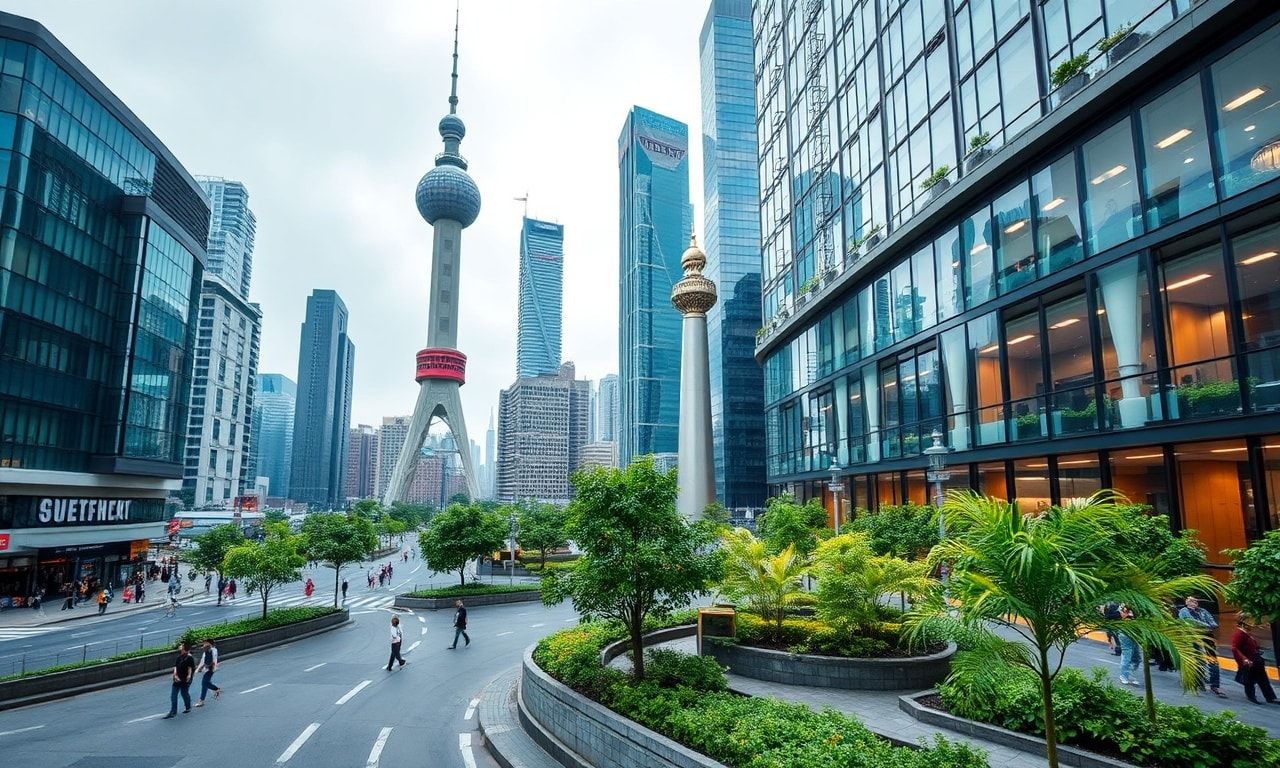
The Vision Behind Shanghai’s Green Initiative
Shanghai, a bustling metropolis known for its rapid development and economic prowess, has set its sights on a new frontier: urban sustainability. The city’s innovative approach to balancing economic growth with environmental responsibility has garnered international attention and praise. This article delves into the vision behind Shanghai’s green initiative, highlighting key projects and policies that are shaping the city’s sustainable future.
Key Projects Driving Sustainability
Several flagship projects are at the heart of Shanghai’s sustainability drive. The city has invested heavily in renewable energy, with numerous solar and wind energy projects dotting its skyline. Additionally, Shanghai’s public transportation system has been revamped to include more electric and hybrid buses, reducing the city’s carbon footprint significantly. The development of green buildings, equipped with energy-efficient technologies, is another cornerstone of the city’s sustainability efforts.
One notable project is the Shanghai Tower, the second-tallest building in the world, which boasts a unique double-skin facade that reduces energy consumption by up to 21%. The tower also features a wind turbine that generates electricity, further contributing to the city’s green energy goals. These projects are not only reducing Shanghai’s environmental impact but also serving as models for other cities around the world.
Public Transportation and Green Mobility
Shanghai’s public transportation system is a critical component of its sustainability strategy. The city has one of the most extensive metro systems in the world, with over 800 kilometers of tracks. This extensive network encourages residents to use public transportation instead of private vehicles, thereby reducing traffic congestion and air pollution. The introduction of electric and hybrid buses has further enhanced the city’s green mobility initiatives.
In addition to the metro and bus systems, Shanghai has also invested in cycling infrastructure. The city has built numerous bike lanes and bike-sharing stations, making cycling a convenient and eco-friendly transportation option for residents. These initiatives have not only improved air quality but also promoted a healthier lifestyle among Shanghai’s inhabitants.
Green Spaces and Urban Planning
Shanghai’s commitment to sustainability extends beyond energy and transportation. The city has made significant efforts to increase green spaces and promote sustainable urban planning. The development of parks, gardens, and urban forests has not only enhanced the city’s aesthetic appeal but also provided residents with spaces to relax and enjoy nature.
One such project is the Shanghai Green Belt, a 150-kilometer-long green corridor that stretches across the city. This project aims to connect various green spaces, creating a network of parks and natural areas that residents can easily access. The Green Belt also serves as a habitat for wildlife, promoting biodiversity within the urban environment.
The Role of Technology in Shanghai’s Sustainability Efforts
Technology plays a pivotal role in Shanghai’s sustainability initiatives. The city has embraced smart city technologies to monitor and manage its resources more efficiently. For instance, Shanghai uses advanced sensors and data analytics to optimize energy consumption in buildings and public spaces. This data-driven approach allows the city to identify areas for improvement and implement targeted solutions.
Furthermore, Shanghai has invested in smart grids and smart meters to enhance the efficiency of its energy distribution system. These technologies enable real-time monitoring of energy usage, allowing the city to respond quickly to changes in demand and reduce energy waste. The integration of technology into Shanghai’s sustainability efforts demonstrates the city’s commitment to innovation and continuous improvement.
International Collaboration and Knowledge Sharing
Shanghai’s sustainability efforts are not limited to its borders. The city actively collaborates with international partners to share knowledge and best practices. Through initiatives such as the Shanghai International Forum on Sustainable Development, Shanghai engages with experts and policymakers from around the world to discuss innovative solutions to global environmental challenges.
These collaborations have led to the exchange of ideas and technologies, enabling Shanghai to adopt best practices from other cities and countries. For example, Shanghai has partnered with cities like Copenhagen and Singapore to learn from their experiences in sustainable urban planning and green transportation. This international collaboration has significantly enhanced Shanghai’s sustainability efforts and positioned the city as a global leader in urban sustainability.
Challenges and Future Prospects
Despite its impressive achievements, Shanghai faces several challenges in its quest for sustainability. Rapid urbanization and population growth pose significant hurdles in maintaining the balance between economic development and environmental protection. Additionally, the city must address issues such as air pollution, water scarcity, and waste management to ensure a sustainable future.
To overcome these challenges, Shanghai continues to invest in research and development, exploring new technologies and innovative solutions. The city is also promoting public awareness and engagement, encouraging residents to adopt sustainable practices in their daily lives. By fostering a culture of sustainability, Shanghai aims to create a greener, healthier, and more resilient urban environment.
Looking ahead, Shanghai’s sustainability efforts are expected to intensify. The city has set ambitious targets to reduce its carbon emissions and increase the share of renewable energy in its energy mix. With its commitment to innovation and collaboration, Shanghai is poised to achieve these goals and continue setting a global example in urban sustainability.
For those interested in exploring sustainable urban living, Shanghai offers a wealth of experiences and insights. Whether it’s visiting the city’s green spaces, utilizing its efficient public transportation system, or learning about its innovative technologies, Shanghai provides a unique opportunity to witness the future of sustainable urban development. For a comprehensive guide to sustainable travel, including destinations like Dubai, you can refer to دليل السفر إلى مدينة دبي.
Delving into the evolving landscape of global education, our latest feature education trends in the Arab world offers a comprehensive overview of current developments and challenges.
In the rapidly evolving world of technology, understanding upcoming innovations is crucial; explore key tech trends shaping our future in our latest feature.
In the ever-evolving world of arts and culture, a new wave is emerging in Türkiye, as detailed in our latest feature, Turkey’s cultural transformation.