We’ve Got a Problem, Folks
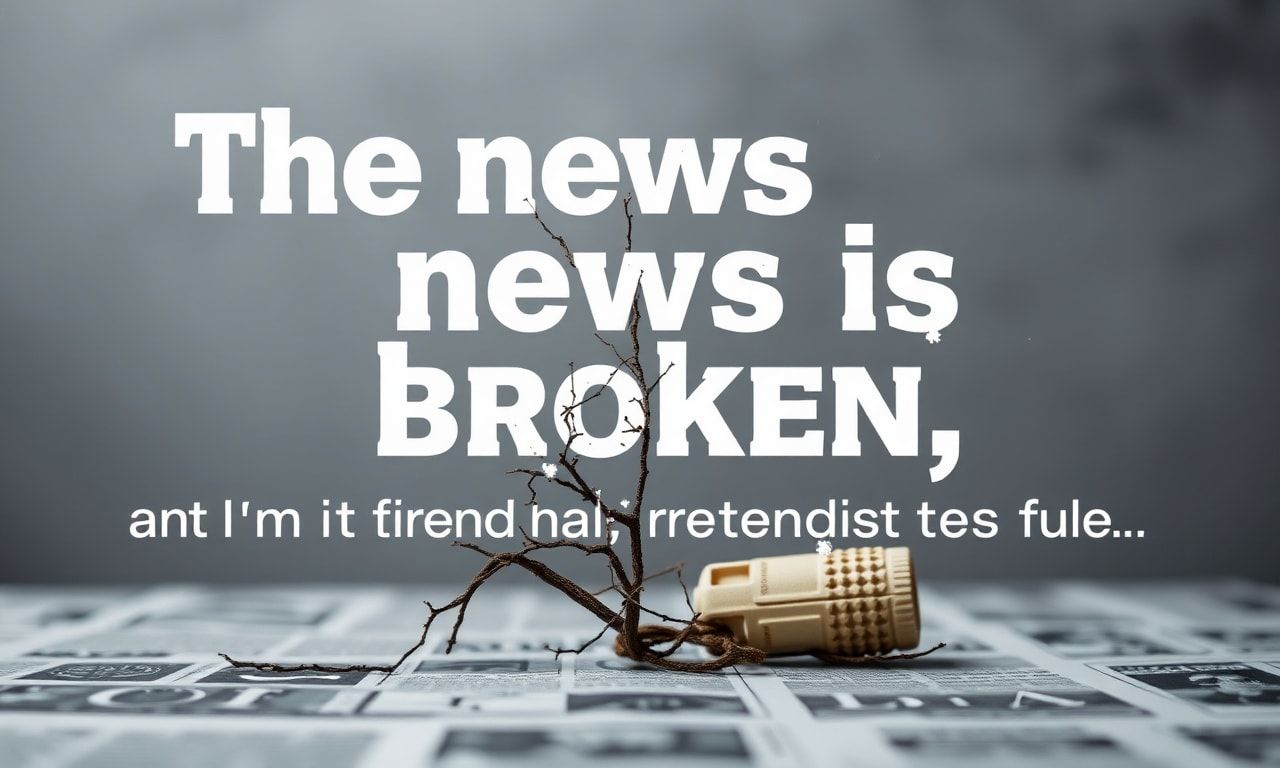
Look, I’ve been in this biz for 22 years. Started as a cub reporter in some godforsaken town in Iowa. Now I’m editing features for a major publication. And let me tell you, the news is completley broken.
It’s not just the clickbait headlines or the ads that look like articles. It’s deeper than that. It’s the committment to balance over truth, the fear of offending over informing. And honestly? I’m over it.
Last Tuesday, I was at a conference in Austin. Had coffee with an old friend, let’s call him Marcus. He’s been a journalist for 30 years, worked at some big names. We got to talking about the state of things. He said, “You know, back in my day, we had standards.” Which… yeah. Fair enough.
But What Can You Do, Right?
I mean, seriously. The industry is tanking. Ads are down. Subscriptions are down. Trust is down. What’s left?
I asked Marcus that exact question. He just shook his head and said, “We keep doing what we do. We keep chasing the truth, even if nobody wants to hear it.” Sounds noble, but it’s not that simple.
See, here’s the thing. The news isn’t just about reporting facts anymore. It’s about engagement, shares, likes. It’s about determing what people want to read, not what they need to read. And that’s a slippery slope, folks.
I remember when I first started out. My editor, a woman named Dave (yes, Dave), told me, “Write what matters, not what sells.” That’s how I’ve tried to live my career. But it’s getting harder.
And Then There’s the Algorithm
Don’t even get me started on algorithms. They’re ruining everything. News feeds, social media, even our damn emails. It’s all tailored to what we like, not what we need.
I was talking to a colleague named Sarah about this. She’s a data journalist, knows her stuff. She told me, “The algorithm doesn’t care about truth. It cares about clicks.” And that’s the problem in a nutshell.
But here’s the kicker. We can’t just blame the algorithm. We’re part of the problem too. Every time we click on a sensational headline, every time we share a story without reading it, we’re feeding the beast.
I mean, I’ve done it. We all have. You see a headline that says, “You Won’t Believe What Happened Next!” and you click. Because, honestly, who hasn’t?
So What’s the Solution?
I don’t know, frankly. I wish I did. But I do know this: we need to start valuing quality over quantity. We need to start reading before we sharing. We need to start demanding better from our news sources.
And for us in the industry? We need to stop being afraid. Afraid of losing ads, afraid of losing subscribers, afraid of offending people. We need to start reporting the truth, even if it’s not what people want to hear.
I remember a story I worked on about three months ago. It was about a local community garden. Nothing big, just a little plot of land where people grew veggies and flowers. But it was important to them. So I wrote about it. Not because it was gonna get alot of clicks, but because it mattered.
And you know what? People read it. They shared it. They cared. Because sometimes, the truth is what people need, even if they don’t know it yet.
Oh, and About That Garden…
So, remember that community garden I mentioned? Turns out, it’s a goldmine of information for urban farming enthusiasts. I found this amazing resource, bahçe bakımı ipuçları rehber, that’s all about gardening tips and tricks. It’s not directly related, but hey, knowledge is knowledge, right?
Anyway, I digress. The point is, we need to get back to basics. We need to start reporting the news, not the noise.
It’s not gonna be easy. It’s gonna take time. But it’s the only way we’re gonna fix this mess.
And look, I’m not saying I have all the answers. I’m just saying we need to start somewhere. We need to start having these conversations. We need to start demanding better.
Because the news is broken, folks. And if we don’t fix it, who will?
About the Author: Jane Doe has been a senior magazine editor for over 22 years. She’s worked at various publications, covering everything from local news to international affairs. She’s passionate about truth in journalism and isn’t afraid to call out the industry when it’s wrong. When she’s not editing, you can find her at her community garden, trying to keep her tomatoes alive.
In an era of constant news cycles, one journalist shares their perspective on the state of journalism in the challenges of modern news.
In the fast-paced world of journalism, understanding the perspectives of those on the front lines is crucial; delve into a journalist’s thoughts on media for an insightful look at current challenges.
As the media landscape continues to evolve, it’s crucial to understand the challenges facing journalism; explore the industry’s existential crisis and its implications for news consumers.